Kuala Lumpur
 In 130 years,
Kuala Lumpur has grown from nothing to a modern, bussling city of well over a million
people. Superficially, KL (as it's almost universally known) may appear to be just another
modern Asian city of gleaming skyscrapers, but it retains much of the character and local
colour that has been so effectively wiped out in other Asian-boom cities such as
Singapore. It has plenty of colonial buildings in its centre, a vibrant Chinatown with
street vendors and night markets, and a bustling Little India. In 130 years,
Kuala Lumpur has grown from nothing to a modern, bussling city of well over a million
people. Superficially, KL (as it's almost universally known) may appear to be just another
modern Asian city of gleaming skyscrapers, but it retains much of the character and local
colour that has been so effectively wiped out in other Asian-boom cities such as
Singapore. It has plenty of colonial buildings in its centre, a vibrant Chinatown with
street vendors and night markets, and a bustling Little India.
When KL does something, it likes to do it big. The twin Petronas Towers skyscrapers - the
tallest building in the world - dominate the skyline, while in Merdeka Square stands a 95m
(312ft) flagpole. Despite the economic crisis, Kuala Lumpur is currently the site of
large-scale development, with work underway on a new US$8 billion city on the southern
fringe of the capital as well as an adjoining 'ultra-high-tech multimedia supercorridor'.
Before the Asian economic crisis hit in 1997, there were also plans to build the world's
longest building, too.
 Budget
hotels and hostels can be found in Chinatown and Jalan Pudu Lama. Mid-range hotels are
concentrated in Chinatown and on Jalan Bukit Bintang. The night market in Chinatown is the
most interesting place to eat in the evening. Budget
hotels and hostels can be found in Chinatown and Jalan Pudu Lama. Mid-range hotels are
concentrated in Chinatown and on Jalan Bukit Bintang. The night market in Chinatown is the
most interesting place to eat in the evening.
Melaka
 Melaka is an
interesting blend of Chinese, Portuguese, Dutch and British influences and is considered
Malaysia's most historic city. It was once the most important trading port in the region
but is now little more than a sleepy backwater. Ancient-looking junks still sail up the
river, imbuing the waterfront with a timeless charm, and the city remains full of
intriguing Chinese streets, antique shops, temples and Melaka is an
interesting blend of Chinese, Portuguese, Dutch and British influences and is considered
Malaysia's most historic city. It was once the most important trading port in the region
but is now little more than a sleepy backwater. Ancient-looking junks still sail up the
river, imbuing the waterfront with a timeless charm, and the city remains full of
intriguing Chinese streets, antique shops, temples and  nostalgic reminders of the
now-departed European colonial powers. nostalgic reminders of the
now-departed European colonial powers.
 The
most imposing relic of the Dutch period in Melaka is the massive pink town hall,
Stadthuys, built between 1641 and 1660. It's believed to be the oldest Dutch building in
Asia and displays all the characteristic features of Dutch colonial architecture (read
incredibly weighty doors and pleasant louvred windows). The building houses government
offices and an excellent Ethnographic Museum, which highlights aspects of local history
and culture. The imposing ruins of St Paul's Church, built by the Portuguese over 400
years ago, stand in a beautiful setting atop St Paul's Hill. It was regularly visited by
St Francis Xavier, who was buried here for a short period before being transferred to Goa
in India. The church fell into disuse when the Dutch arrived, but is still surrounded by
old Dutch tombstones. The Brits, with great sensitivity, used the church as a gunpowder
store. The
most imposing relic of the Dutch period in Melaka is the massive pink town hall,
Stadthuys, built between 1641 and 1660. It's believed to be the oldest Dutch building in
Asia and displays all the characteristic features of Dutch colonial architecture (read
incredibly weighty doors and pleasant louvred windows). The building houses government
offices and an excellent Ethnographic Museum, which highlights aspects of local history
and culture. The imposing ruins of St Paul's Church, built by the Portuguese over 400
years ago, stand in a beautiful setting atop St Paul's Hill. It was regularly visited by
St Francis Xavier, who was buried here for a short period before being transferred to Goa
in India. The church fell into disuse when the Dutch arrived, but is still surrounded by
old Dutch tombstones. The Brits, with great sensitivity, used the church as a gunpowder
store.
For those who prefer their religious architecture to be a little more colourful, the Cheng
Hoon Teng Temple in the old part of the city is the oldest Chinese temple in Malaysia. It
was founded in 1646, and all of the materials and all of the artisans who built it were
imported from China. The old part of Melaka is a fascinating area to wander around, and
this is where you'll find many of Melaka's famous antique shops; a stroll along Jalan Hang
Jebat will pass the best of them.
Georgetown
- Penang Island
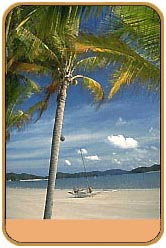 The 285 sq
km (177 sq mi) island of Penang, off Peninsula Malaysia's north-western coast, is the
oldest British settlement in Malaysia and one of the country's premier resort areas. The
island's beaches are touted as the major drawcard but they're somewhat overrated. What
makes Penang Island really tick is the vibrant and intriguing city of Georgetown (pop
400,000) on the island's north-eastern coast. This city has more Chinese flavour than
either Singapore or Hong Kong, and in its older neighbourhoods you could be forgiven for
thinking that the clock stopped at least 50 years ago. Georgetown is a compact city and
it's a delight to wander around. Set off in any direction and you're certain to see
beautiful old Chinese houses, vegetable markets, temple ceremonies, trishaws, mahjong
games and all the other to-ings and fro-ings of Asian street life. The 285 sq
km (177 sq mi) island of Penang, off Peninsula Malaysia's north-western coast, is the
oldest British settlement in Malaysia and one of the country's premier resort areas. The
island's beaches are touted as the major drawcard but they're somewhat overrated. What
makes Penang Island really tick is the vibrant and intriguing city of Georgetown (pop
400,000) on the island's north-eastern coast. This city has more Chinese flavour than
either Singapore or Hong Kong, and in its older neighbourhoods you could be forgiven for
thinking that the clock stopped at least 50 years ago. Georgetown is a compact city and
it's a delight to wander around. Set off in any direction and you're certain to see
beautiful old Chinese houses, vegetable markets, temple ceremonies, trishaws, mahjong
games and all the other to-ings and fro-ings of Asian street life.
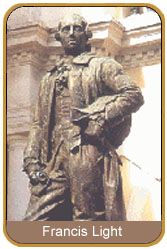 You can still see the time-worn walls of Fort Cornwallis in the centre of
Georgetown where the first Briton, Captain Light, set foot in 1786 on what was then a
virtually uninhabited island. He established a free port here and the stone fort was
finished a few decades later. The area within the fort is now a park liberally sprinkled
with cannons, many of them retrieved from local pirates. Seri Rambai, the largest and most
important cannon has a chequered history dating back to 1600. It's famed for its
procreative powers, and childless women are recommended to place flowers in the barrel of
'the big one' and offer special prayers. You can still see the time-worn walls of Fort Cornwallis in the centre of
Georgetown where the first Briton, Captain Light, set foot in 1786 on what was then a
virtually uninhabited island. He established a free port here and the stone fort was
finished a few decades later. The area within the fort is now a park liberally sprinkled
with cannons, many of them retrieved from local pirates. Seri Rambai, the largest and most
important cannon has a chequered history dating back to 1600. It's famed for its
procreative powers, and childless women are recommended to place flowers in the barrel of
'the big one' and offer special prayers.
 Penang
has many kongsis (clan houses that operate partly as temples and partly as meeting halls
for Chinese of the same clan or surname) but Khoo Kongsi is easily the finest. The
original building was so magnificent and elaborate that no-one was surprised when the roof
caught fire on the very night it was completed. This misfortune was taken merely as a sign
that the building had been too grandiose, so a marginally less magnificent structure was
built. One wonders at the opulence of the original since the present structure is a
dazzling mix of dragons, statues, paintings, lamps, coloured tiles and carvings. Penang
has many kongsis (clan houses that operate partly as temples and partly as meeting halls
for Chinese of the same clan or surname) but Khoo Kongsi is easily the finest. The
original building was so magnificent and elaborate that no-one was surprised when the roof
caught fire on the very night it was completed. This misfortune was taken merely as a sign
that the building had been too grandiose, so a marginally less magnificent structure was
built. One wonders at the opulence of the original since the present structure is a
dazzling mix of dragons, statues, paintings, lamps, coloured tiles and carvings.
Kuan Yin Teng Temple right in the centre of the old part of Georgetown is nowhere near as
impressive, but it's one of the most popular temples in the city and there are often
worshippers burning paper money at the furnaces, night-time puppet shows or Chinese
theatre performances. For the best view of the city and the island, catch the funicular
railway up Penang Hill which rises 830m (2722ft) above Georgetown and provides cool relief
from the sticky heat below. There are pleasant gardens, a hotel, a Hindu temple and a
mosque at the top. The view is particularly good at dusk when Georgetown, far below,
begins to light up.
Most of the popular budget hotels in Georgetown are along Lebuh Chulia. More expensive
options line Jalan Penang. There are plenty of Chinese and Indian restaurants, but be
adventurous and try the succulent local dishes on offer from the street stalls, which
appear at night along the Esplanade behind the Penang Library.
Cameron
Highlands
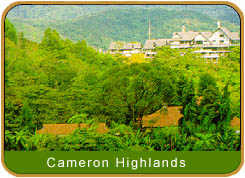 The
Cameron Highlands, in the centre of Peninsular Malaysia, comprise a series of hill
stations at altitudes between 1500 and 1800m (4920 and 5904ft). This fertile area is the
centre of Malaysia's tea industry and it's the place where locals and visitors come to
escape the heat of the plains. Attractions include jungle walks, waterfalls, tours of tea
plantations, beautiful gardens and plenty of wild flowers. The cool weather tempts
visitors to exertions normally forgotten at sea level, like golf, tennis, and long walks,
but this is really Malaysia's R 'n' R capital par excellence for those who don't like the
beach and enjoy a bout of colonial nostalgia. Most of the budget hotels are in the village
of Tanah Rata. The more expensive options are scattered between Tanah Rata and Brinchang. The
Cameron Highlands, in the centre of Peninsular Malaysia, comprise a series of hill
stations at altitudes between 1500 and 1800m (4920 and 5904ft). This fertile area is the
centre of Malaysia's tea industry and it's the place where locals and visitors come to
escape the heat of the plains. Attractions include jungle walks, waterfalls, tours of tea
plantations, beautiful gardens and plenty of wild flowers. The cool weather tempts
visitors to exertions normally forgotten at sea level, like golf, tennis, and long walks,
but this is really Malaysia's R 'n' R capital par excellence for those who don't like the
beach and enjoy a bout of colonial nostalgia. Most of the budget hotels are in the village
of Tanah Rata. The more expensive options are scattered between Tanah Rata and Brinchang.
Tioman
Island
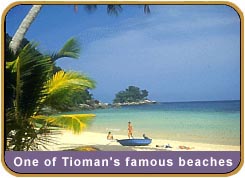 This
picture-postcard island lies off the eastern coast of Peninsula Malaysia in the South
China Sea. It boasts beautiful beaches, clear, coral-filled water, technicolour marine
life, virtually unpopulated jungle highlands, crystal-clear streams, and the dramatic
peaks of Batu Sirau and Nenek Semukut. Tioman has been blessed with exotic place names
like 'Palm-Frond Hill' and 'Village of Doubt' and is generally quoted as the setting for
the mythical Bali Hai in the film South Pacific. The permanent population on Tioman is
low, and locals are usually outnumbered by tourists. June and August are the peak tourist
months, but during the heavy November to January monsoon the island is almost deserted. This
picture-postcard island lies off the eastern coast of Peninsula Malaysia in the South
China Sea. It boasts beautiful beaches, clear, coral-filled water, technicolour marine
life, virtually unpopulated jungle highlands, crystal-clear streams, and the dramatic
peaks of Batu Sirau and Nenek Semukut. Tioman has been blessed with exotic place names
like 'Palm-Frond Hill' and 'Village of Doubt' and is generally quoted as the setting for
the mythical Bali Hai in the film South Pacific. The permanent population on Tioman is
low, and locals are usually outnumbered by tourists. June and August are the peak tourist
months, but during the heavy November to January monsoon the island is almost deserted.
The island's west coast is dotted with villages and is home to a classy resort. Pulau
Tioman is the most popular travellers' destination; Kampung Nipah is the place to go if
you really want to get away from it all. You can get to Tioman by boat from Mersing and
Singapore. The island's largest village, Kampung Tekek, has an airstrip. |


